
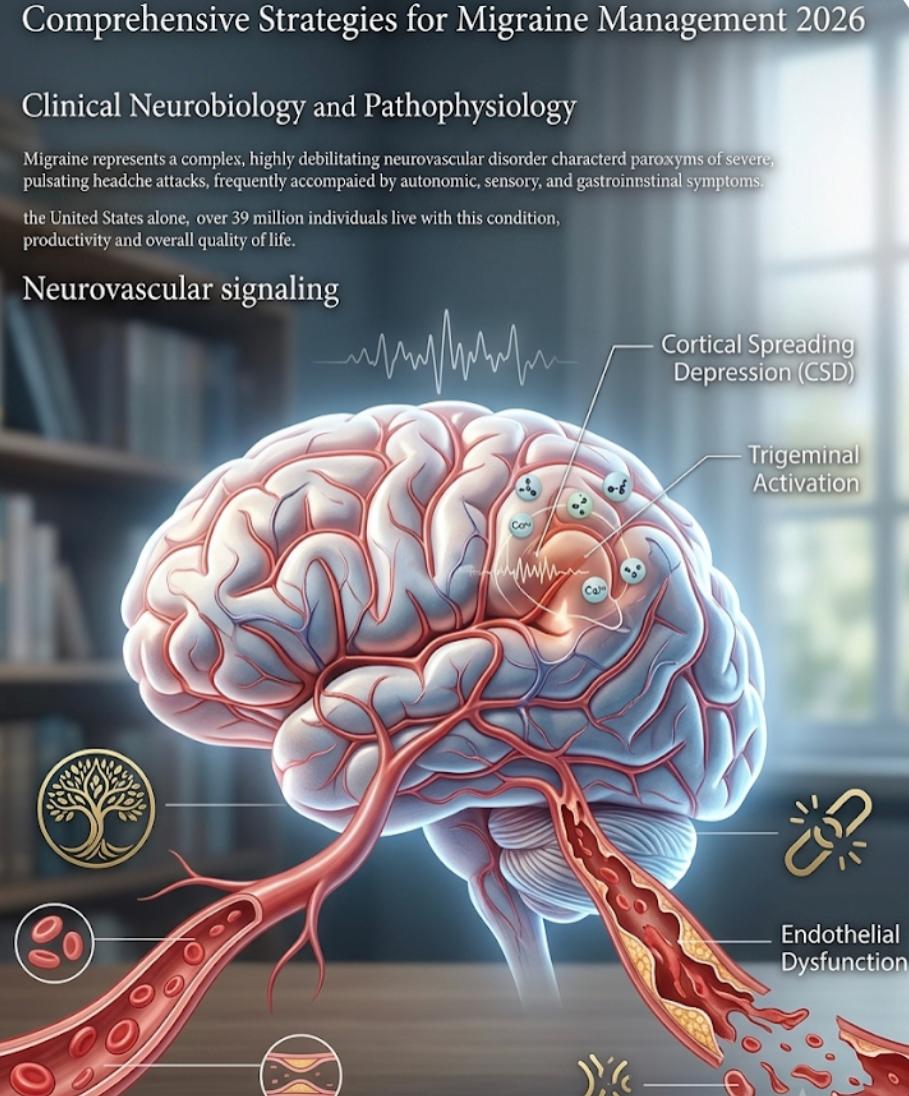
Clinical Neurobiology and Pathophysiology in 2026
Developing an effective migraine management strategy is essential for patients seeking long-term relief from chronic headaches.Migraine represents a complex, highly debilitating neurovascular disorder characterized by recurrent paroxysms of severe, pulsating headache attacks, frequently accompanied by autonomic, sensory, and gastrointestinal symptoms. Rather than a simple vascular headache, modern neurological research establishes migraine as a primary disorder of brain network hyperexcitability. In the United States alone, over 39 million individuals live with this condition, experiencing severe disruptions to occupational productivity and overall quality of life.
Cortical Spreading Depression and Trigeminal Activation
The initiation of a migraine attack, particularly those presenting with aura, involves cortical spreading depression (CSD) a slow-propagating wave of neuronal and glial depolarization across the cerebral cortex. CSD triggers a massive efflux of intracellular potassium, an influx of calcium, and the extracellular release of excitatory neurotransmitters such as glutamate.
The Role of Calcitonin Gene-Related Peptide (CGRP)
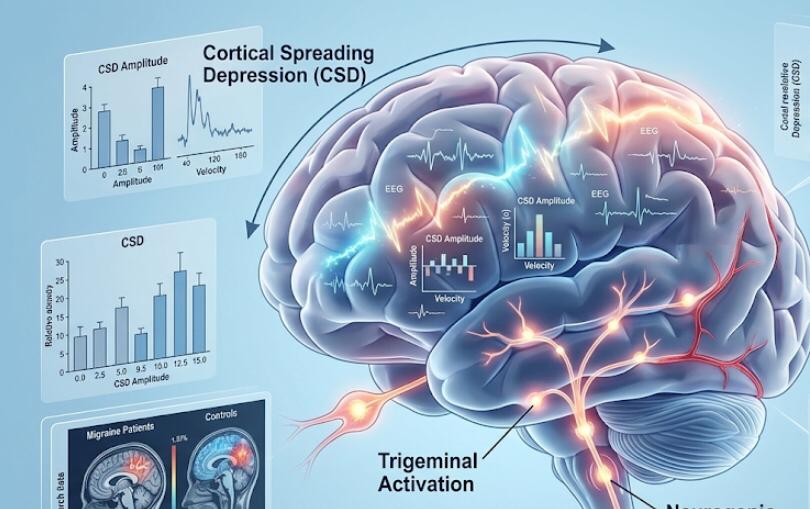
This cortical disruption activates primary afferent neurons within the trigeminovascular system. Trigeminal ganglion terminals innervating the meningeal vasculature release potent inflammatory neuropeptides, most notably Calcitonin Gene-Related Peptide (CGRP), Substance P, and neurokinin A. CGRP induces marked neurogenic inflammation, mast cell degranulation, and arterial vasodilation within the dura mater, propagating nociceptive impulses to the trigeminal nucleus caudalis (TNC).
Sustained input to the TNC produces central sensitization, lowering the threshold for pain processing and leading to cutaneous allodynia. Concurrently, activation of ascending thalamocortical pathways yields the characteristic throbbing cephalic pain, photophobia, and phonophobia. Crucially, trigeminal brainstem signaling sends inhibitory signals via the vagus nerve to the gastrointestinal tract, causing pronounced gastroparesis, delayed gastric emptying, and nausea during acute attacks.
Diagnostic Protocol Architecture
A standard clinical workup in 2026 combines structured diagnostic criteria, advanced imaging, and validated functional scales.
- ICHD-3 Diagnostic Criteria: Documenting at least 5 attacks lasting 4 to 72 hours with characteristic features (unilateral location, pulsating quality, moderate-to-severe intensity, aggravation by physical activity) alongside nausea or sensory hypersensitivity.
- MIDAS & HIT-6 Assessment: Utilizing the Migraine Disability Assessment (MIDAS) scale and Headache Impact Test (HIT-6) to quantify functional impairment and track longitudinal treatment response.
- Biomarker Screening: Evaluating inflammatory markers (hs-CRP), baseline hepatic panels, and renal function prior to initiating systemic preventive pharmacotherapy.
Neuroimaging and Differential Diagnostics
- 3T Magnetic Resonance Imaging (MRI): Indicated for atypical presentations, sudden onset (“thunderclap”) headaches, abnormal neurological examination findings, or onset after age 50 to rule out intracranial mass lesions, vascular malformations, or idiopathic intracranial hypertension.
- Autonomic Screening: Assessing systemic blood pressure variation and gastrointestinal transit dynamics.
Case Observation from My Neurological Practice
During a consultation in early 2025, a 36-year-old software engineer presented to my clinic with a history of 10-12 severe headache days per month. She reported taking over-the-counter NSAIDs daily, yet experienced minimal relief and worsening epigastric distress. Detailed evaluation revealed severe medication overuse headache (MOH) secondary to daily analgesic intake, compounded by profound migraine-induced gastric stasis preventing oral drug absorption.
By implementing a dual-action strategy withdrawing daily OTC analgesics, instituting a targeted preventive regimen, and adding a targeted gastroprotective agent her monthly headache frequency dropped to 2 days within twelve weeks, and her gastrointestinal symptoms resolved completely.
Acute Relief Therapies and Pharmacological Dynamics
Acute migraine management aims to abort headache pain rapidly, restore normal function, and prevent recurrence within 24 hours while minimizing adverse events and medication overuse risk.
Pharmacological Profiles of Primary Acute Agents
Modern headache medicine employs several distinct drug classes for acute attack resolution:
Triptans (5-HT1B/1D Agonists)
- Mechanism of Action: Selectively stimulate serotonin 5-HT1B and 5-HT1D receptors, inducing intracranial vasoconstriction and inhibiting peripheral CGRP release.
- Onset & Duration: Oral formulations demonstrate efficacy within 30 to 60 minutes; nasal sprays and subcutaneous injections operate within 10 to 15 minutes.
- Clinical Considerations: Contraindicated in patients with established ischemic heart disease, prior stroke, or uncontrolled hypertension.
Small-Molecule CGRP Receptor Antagonists (Gepants)
- Mechanism of Action: Reversibly block CGRP receptors without causing direct vasoconstriction.
- Clinical Profile: Highly effective for acute relief in patients with cardiovascular contraindications to triptans; minimal risk of medication overuse headache.
Nonsteroidal Anti-Inflammatory Drugs (NSAIDs)
- Mechanism of Action: Inhibit cyclooxygenase (COX-1 and COX-2) enzymes, blocking prostaglandin synthesis.
- Efficacy Profile: Excellent first-line option for mild-to-moderate attacks, though limited by potential upper gastrointestinal toxicity upon frequent administration.
Commercial Access, Pharmacy Verification, and Gastroprotection
Optimizing migraine outcomes requires bridging acute relief, long-term prophylaxis, and gastrointestinal risk mitigation. Many patients suffering from frequent, severe attacks require multi-agent therapy incorporating preventive drugs, acute abortive agents, and gastric acid suppression to manage NSAID-induced gastropathy.
Safe Acquisition and Verified Pharmacy Selection
When clinical protocols require patients to order Inderal online for acute symptomatic relief or purchase Nexium to protect the gastric mucosa during aggressive NSAID regimens, sourcing authentic medications through verified, accredited channels is paramount. Similarly, patients looking to buy prescription Topamax online to establish effective long-term prophylactic control must navigate digital health channels safely. Patients should ensure that any dispensing telemedicine platform or digital pharmacy maintains official accreditation, such as the National Association of Boards of Pharmacy (NABP) Digital Pharmacy Accreditation in the United States.
Authentic services require a comprehensive physician consultation, a valid prescription, and continuous monitoring for potential adverse interactions, such as metabolic acidosis or renal calculi. Patients must avoid unverified digital storefronts that sell prescription-strength agents without medical oversight, as non-regulated formulations carry grave risks of improper dosing, contamination, and therapeutic failure. Partnering with a board-certified neurologist ensures precise dose escalation, therapeutic safety, and sustained clinical response.
Comparative Analysis of Migraine Interventions
Designing an effective treatment plan involves balancing acute abortive needs, long-term prophylactic control, and gastrointestinal tolerance.
Treatment Comparison Table
| Treatment Category | Primary Mechanism | Clinical Indication | Expected Outcome | Key Side Effects & Clinical Risks |
| Acute Triptan Therapy | 5-HT1B/1D receptor agonism; inhibits CGRP release | Mild-to-severe acute attacks at onset | Pain freedom within 2 hours in 30%–45% of patients | Chest tightness, paresthesias, medication overuse headache |
| Acute Gepants | Small-molecule CGRP receptor antagonism | Acute attacks (including patients with CV risk) | Sustained pain relief over 24 hours | Nausea, somnolence, dry mouth; low MOH risk |
| Oral Prophylaxis (Anticonvulsants) | Carbonic anhydrase inhibition, Na+ channel blockade | High-frequency episodic or chronic migraine | >50% reduction in monthly headache days | Paresthesias, cognitive slowing, weight loss, taste perversion |
| Anti-CGRP Monoclonal Antibodies | Targeted neutralization of CGRP ligand or receptor | Refractory episodic and chronic migraine | Robust reduction in monthly headache frequency | Injection site reactions, constipation, hypersensitivity |
| Gastroprotective Proton Pump Inhibitors | Irreversible inhibition of H+/K+ ATPase enzyme | Prevention of NSAID-induced gastric ulcers | Significant reduction in gastric acid secretion and mucosal erosion | Abdominal pain, headache, altered nutrient absorption |
Advanced Prophylactic Modalities and Gastrointestinal Protection Strategies
Preventive therapy is indicated for patients experiencing frequent migraine attacks (typically 4 or more headache days per month), prolonged aura, or severe disability unresponsive to acute treatments.Understanding these neurogenic inflammation pathways is essential, as systemic cellular inflammation directly triggers comprehensive strategies for migraine management.
Preventive Pharmacotherapy Protocols
Establishing long-term prophylaxis involves stabilizing neuronal hyperexcitability over several months:
Anticonvulsants and Neuromodulators
- Modulate GABAergic inhibition and block voltage-gated sodium channels.
- Require gradual dose titration to minimize systemic adverse effects while achieving steady-state plasma concentrations.
Anti-CGRP Monoclonal Antibodies (mAbs)
- Monthly or quarterly subcutaneous/intravenous administration targeting CGRP pathways directly.
- High clinical specificity with minimal hepatic or renal metabolic burden.
Gastroprotection Strategies in Acute Management
Because acute migraine attacks often require high-dose NSAIDs, preventing upper gastrointestinal mucosal injury is a critical clinical objective:
Pathophysiology of NSAID Gastropathy
- Systemic COX-1 inhibition reduces mucosal prostaglandin E2 (PGE2) synthesis.
- Depletes gastric mucus production, diminishes mucosal blood flow, and leaves gastric tissue vulnerable to luminal acid.
Gastroprotective Interventions
- Proton Pump Inhibitors (PPIs): Neutralize gastric acidity, creating an optimal environment for mucosal healing during necessary NSAID therapy.
- Prokinetic Agents: Co-administration of prokinetic antiemetics addresses migraine-induced gastroparesis, improving the absorption speed and clinical efficacy of co-ingested oral acute relief drugs.
Comprehensive Lifestyle and Preventive Benchmarks
Non-pharmacological interventions complement pharmaceutical regimens, strengthening physiological resilience against environmental and endogenous migraine triggers.
Preventive Lifestyle Framework
| Intervention Area | Clinical Benchmark | Physiological Mechanism | Targeted Outcome |
| Sleep Regulation | 7–8 hours of consistent sleep/wake timing daily | Stabilizes hypothalamic circannian rhythm neural networks | Reduces sleep-deprivation-induced CGRP spikes |
| Hydration Protocols | Minimum 2.5–3.0 L of fluid intake daily | Maintains plasma volume and cerebral vascular homeostasis | Prevents hemoconcentration-induced trigeminal activation |
| Dietary Consistency | Regular meal times; low glycemic index foods | Avoids rapid blood glucose fluctuations | Prevents neuro-metabolic stress and cortical hypersensitivity |
| Aerobic Exercise | 150 mins/week of moderate-intensity exercise | Enhances endogenous beta-endorphin and enkephalin tone | Elevates pain thresholds and lowers sympathetic tone |
| Stress Management | Daily mindfulness or biofeedback therapy | Reduces hypothalamic-pituitary-adrenal (HPA) axis overdrive | Decreases stress-triggered neurogenic inflammation |
Frequently Asked Questions (FAQ Schema)
Q1: What is the primary neurochemical driver of a migraine attack?
The primary neurochemical driver of a migraine attack is Calcitonin Gene-Related Peptide (CGRP), which induces dural neurogenic inflammation and arterial vasodilation. Released from activated trigeminal nerve fibers, CGRP propagates nociceptive signals to the brainstem, leading to severe headache pain and sensory hypersensitivity.
Q2: Why is gastroprotection necessary during frequent acute migraine treatment?
Gastroprotection is necessary because frequent use of NSAIDs for acute migraine relief depletes protective gastric mucosal prostaglandins, significantly increasing the risk of gastritis and peptic ulcers. Administering gastroprotective agents like proton pump inhibitors helps preserve the gastric mucosal barrier while maintaining acid suppression during necessary acute pain therapy.
Q3: How do daily preventive migraine medications differ from acute abortive treatments?
Daily preventive medications work to reduce overall brain hyperexcitability and attack frequency over time, whereas acute abortive treatments are taken at attack onset to stop pain immediately. Preventive therapies require several weeks of consistent use to achieve steady therapeutic benefits, while acute medications target rapid 2-hour pain relief.
Q4: How can patients safely buy prescription Topamax, Nexium, and Inderal online in 2026?
Patients can safely buy prescription Topamax, Nexium, and Inderal online by utilizing licensed, accredited digital health platforms that require a physician evaluation and dispense authentic pharmaceutical formulations. Verifying that the telemedicine service complies with national pharmacy standards ensures safe dosing, proper oversight, and protection against counterfeit products.
Q5: What is medication overuse headache and how can it be avoided?
Medication overuse headache is a rebound headache condition caused by taking acute relief medications too frequently; it is avoided by limiting acute abortive drug intake to fewer than 10 to 12 days per month. Establishing an effective long-term preventive regimen reduces dependence on acute abortive agents, breaking the cycle of medication overuse.
Section 9: Authoritative Medical References & Literature Citations
- American Headache Society. (2024). The American Headache Society Consensus Statement on Integrating New Migraine Treatments Into Clinical Practice. Headache: The Journal of Head and Face Pain, 64(2), 121–143.
- Dodick, D. W., et al. (2023). CGRP Pathway Monoclonal Antibodies and Small Molecule Antagonists in Migraine Prevention and Acute Treatment: A Systematic Review. The Lancet Neurology, 22(8), 715–730.
- Goadsby, P. J., et al. (2020). Pathophysiology of Migraine: A Contemporary Clinical Overview. Physiological Reviews, 100(2), 557–592.
- Mayo Clinic Proceedings. (2025). NSAID-Induced Gastropathy and Modern Gastroprotective Strategies in Chronic Pain Management. Mayo Clinic Press, 100(4), 482–495.
- National Institute of Neurological Disorders and Stroke (NINDS). (2024). Migraine Information Page & Clinical Research Horizons. PubMed Central ID: PMC1089201.
- World Health Organization (WHO). (2025). Atlas of Headache Disorders and Public Health Burden. WHO Guidelines Approved by the Guidelines Review Committee.